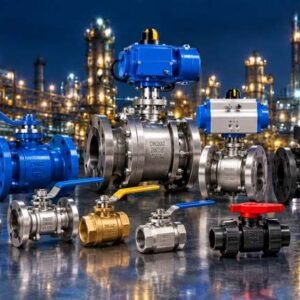

Technical Specifications
| Specification | Details |
|---|---|
| Product | Actuated Valves |
| Valve Types | Ball, Butterfly, Gate, Globe, Plug, Diaphragm |
| Actuator Types | Pneumatic, Electric, Hydraulic, Electro-Hydraulic |
| Size | DN / NPS, as required |
| Pressure Class | ASME Class 150–2500, as applicable |
| Body Materials | Carbon Steel, Stainless Steel, Alloy Steel, Cast Iron |
| Control & Operation | On/Off, Modulating, Remote, Automatic |
| End Connections | Flanged, Wafer, Butt-Weld, Threaded |
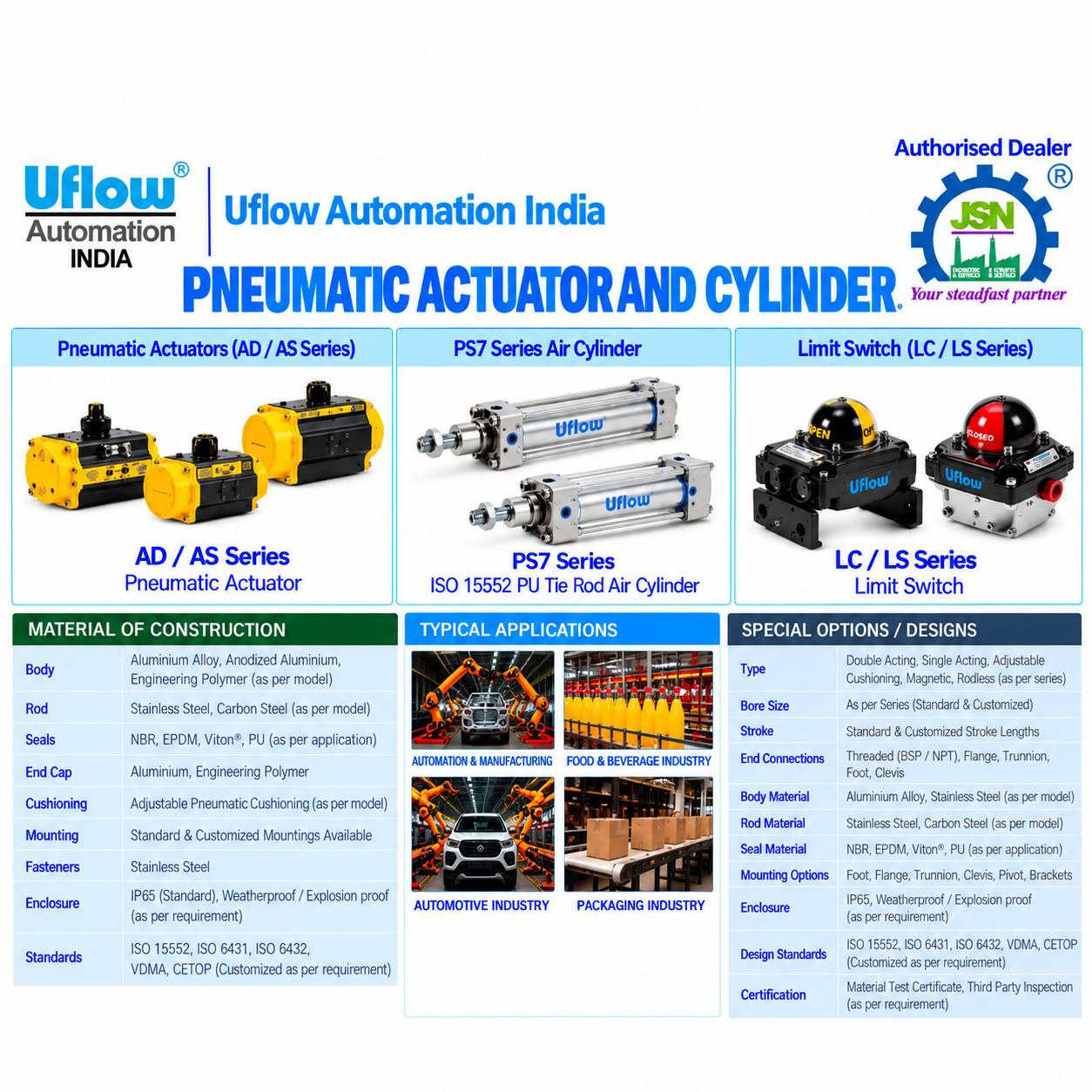
Product Information
Actuated Valves — Technical Overview & Selection Guide
Overview
Actuated valves are automatically operated valves equipped with pneumatic, electric, hydraulic, or electro-hydraulic actuators to control the opening, closing, or positioning of a valve. They are designed for reliable remote and automated operation in piping and process systems.
Actuated valves are widely used where automatic isolation, flow control, remote operation, frequent cycling, or integration with process control systems is required. The actuator operates the valve according to signals from control systems, PLCs, instrumentation, or other automation equipment.
Key Features
-
Automatic and remote valve operation
-
Pneumatic, electric, hydraulic, and electro-hydraulic actuation options
-
Suitable for on/off isolation and modulating applications, depending on valve and actuator design
-
Fast and reliable operation
-
Suitable for frequent cycling applications
-
Manual override options available, depending on design
-
Suitable for liquid, gas, steam, and compatible process media
-
Available for low- and high-pressure applications
-
Suitable for horizontal and vertical installation, depending on valve design
-
Available with various valve types, materials, and end connections
-
Suitable for integration with PLC, DCS, SCADA, and other control systems
-
Fail-open, fail-close, or fail-in-place configurations available, where applicable
Common Actuated Valve Types
-
Actuated Ball Valve
-
Actuated Butterfly Valve
-
Actuated Gate Valve
-
Actuated Globe Valve
-
Actuated Plug Valve
-
Actuated Diaphragm Valve
-
Pneumatically Actuated Valve
-
Electrically Actuated Valve
-
Hydraulically Actuated Valve
-
Electro-Hydraulically Actuated Valve
Technical Selection Parameters
Selection should consider:
| Parameter | Selection Consideration |
|---|---|
| Valve Type | Ball / Butterfly / Gate / Globe / Plug / Diaphragm |
| Actuator Type | Pneumatic / Electric / Hydraulic / Electro-Hydraulic |
| Size | DN / NPS |
| Pressure Class | ASME Class 150–2500, as applicable |
| Design Pressure | Project/design requirement |
| Design Temperature | Project/design requirement |
| Fluid | Liquid / Gas / Steam / Process Fluid |
| Flow Rate | Minimum / Normal / Maximum Flow |
| Valve Function | On/Off / Modulating, as applicable |
| Body Material | Carbon Steel / Stainless Steel / Alloy Steel / Cast Iron |
| Trim Material | Selected according to service conditions |
| Seat Material | Selected according to fluid, pressure, and temperature |
| Actuator Torque/Thrust | Required operating torque or thrust |
| Operating Pressure | Required pneumatic/hydraulic pressure, where applicable |
| Power Supply | Required electrical supply for electric actuators |
| Control Signal | On/Off / Modulating / 4–20 mA / Other |
| Fail Position | Fail Open / Fail Close / Fail in Place, where applicable |
| End Connection | Flanged / Wafer / Butt-Weld / Threaded |
| Installation | Horizontal / Vertical, according to design |
| Operating Frequency | Required cycle frequency |
| Enclosure Protection | Required IP rating, where applicable |
| Hazardous Area | Standard / Explosion-Proof, as applicable |
Materials
Common actuated valve body materials include:
-
Carbon Steel
-
Stainless Steel
-
Alloy Steel
-
Cast Iron
-
Ductile Iron, where applicable
Valve trim, stem, disc, ball, plug, seat, and other wetted components should be selected according to fluid compatibility, pressure, temperature, erosion, corrosion, and service requirements.
Actuator materials and construction should be suitable for the operating environment, ambient temperature, corrosion exposure, and required operating frequency.
Actuator Selection
The actuator is a critical component and should be selected according to the valve operating requirements.
Pneumatic Actuator
Pneumatic actuators use compressed air to operate the valve and are commonly selected for fast operation and frequent cycling.
Selection may consider:
-
Supply Air Pressure
-
Required Torque/Thrust
-
Double-Acting or Spring-Return Configuration
-
Fail-Open / Fail-Close Requirement
-
Operating Speed
-
Ambient Conditions
-
Cycle Frequency
Electric Actuator
Electric actuators use an electric motor and gear mechanism to operate the valve.
Selection may consider:
-
Power Supply
-
Operating Torque/Thrust
-
Open/Close Time
-
Duty Cycle
-
Control Signal
-
Manual Override
-
Enclosure/IP Rating
-
Hazardous Area Requirements
Hydraulic Actuator
Hydraulic actuators use pressurized hydraulic fluid to generate the required operating force and are commonly used where high torque or thrust is required.
Selection may consider:
-
Hydraulic Supply Pressure
-
Required Torque/Thrust
-
Operating Speed
-
Fail Position
-
Hydraulic Fluid Compatibility
-
Operating Frequency
Control & Accessories
Actuated valves may be supplied with suitable control and monitoring accessories according to the application.
Common accessories may include:
-
Solenoid Valve
-
Limit Switches
-
Position Indicator
-
Positioner
-
Air Filter Regulator
-
Pressure Regulator
-
Speed Controller
-
Junction Box
-
Local Control Station
-
Manual Override
-
Position Transmitter
Accessory selection should be based on the valve function, actuator type, control system, hazardous-area requirements, and project specifications.
End Connections
Actuated valves may be supplied with:
-
Flanged Ends
-
Wafer Connections
-
Butt-Weld Ends
-
Threaded Ends
-
Lug-Type Connections, where applicable
-
Socket-Weld Ends, where applicable
The end connection should match the piping system, pressure rating, fluid service, installation arrangement, and applicable project specifications.
Operation
Actuated valves may be configured for:
-
On/Off Operation
-
Open/Close Operation
-
Modulating Operation, where applicable
-
Remote Operation
-
Automatic Operation
-
Local Manual Operation
The actuator may receive signals from a PLC, DCS, SCADA system, control panel, or other process control equipment.
For safety-critical applications, the actuator and valve may be configured with a defined fail position such as Fail Open, Fail Close, or Fail in Place, according to the process requirements.
Quick Selection Guide
Valve Type: Select the appropriate valve type based on isolation, flow-control, pressure, temperature, and service requirements.
Fluid: Identify whether the service is liquid, gas, steam, or another process medium.
Flow Rate: Provide minimum, normal, and maximum flow requirements.
Size: Specify DN/NPS based on piping size and required flow capacity.
Pressure: Provide operating and design pressure together with the applicable pressure class.
Temperature: Specify minimum, normal, maximum operating temperature, and design temperature.
Actuator Type: Select pneumatic, electric, hydraulic, or electro-hydraulic actuation according to the application.
Torque/Thrust: Provide the required actuator torque or thrust based on valve operating requirements.
Operation: Define whether the valve is required for on/off or modulating service.
Fail Position: Specify Fail Open, Fail Close, or Fail in Place where applicable.
Power/Supply: Provide electrical, pneumatic, or hydraulic supply requirements according to actuator type.
Control Signal: Specify the required control arrangement, such as on/off, modulating, or 4–20 mA.
Materials: Select body, trim, seat, stem, and actuator materials according to fluid, pressure, temperature, corrosion, and environmental conditions.
Installation: Confirm horizontal or vertical installation requirements according to the selected valve and actuator design.
Connection: Specify flanged, wafer, butt-weld, threaded, or other applicable connection.
Hazardous Area: Where applicable, specify hazardous-area classification and required explosion protection.
Operating Frequency: Provide expected cycle frequency where the valve will be frequently operated.
Testing & Inspection
Depending on project specifications and applicable standards, actuated valves may undergo:
-
Shell/body pressure testing
-
Seat leakage testing
-
Functional and operational testing
-
Valve opening and closing verification
-
Actuator torque/thrust verification
-
Stroke and travel verification
-
Control signal verification
-
Limit switch testing
-
Position feedback testing
-
Dimensional inspection
-
PMI (Positive Material Identification), where applicable
-
MTC verification
-
Visual and surface inspection
-
Actuator and accessory testing
-
IP/enclosure verification, where applicable
-
NDE (Non-Destructive Examination), where applicable
Applications
Actuated valves are commonly used in:
-
Oil & Gas
-
Refineries
-
Petrochemical Plants
-
Chemical Plants
-
Power Plants
-
Water Treatment
-
Wastewater Treatment
-
Steam Systems
-
Boiler Systems
-
Process Automation
-
Process Piping
-
Pipelines
-
Pumping Systems
-
Gas Distribution Systems
-
HVAC Systems
-
Utilities
-
Industrial Plants
Engineering Inputs for RFQ
For technical enquiry and quotation, provide:
Valve Type • Actuator Type • Size • Pressure Class • Fluid • Flow Direction • Minimum/Normal/Maximum Flow • Design Pressure • Operating & Design Temperature • Body Material • Trim & Seat Material • Required Torque/Thrust • Actuator Supply • Power Supply, where applicable • Control Signal • Valve Function • Fail Position • End Connection • Installation Orientation • Operating Frequency • Hazardous Area Classification, if applicable • Enclosure/IP Rating • Accessories • Testing & Inspection Requirements
Manufacturer Brands
1. ZOLOTO — Industrial Valves
Brand: ZOLOTO
Website: www.zolotovalves.com
2. MARCK — Industrial Valves
Brand: MARCK
Manufacturer: Hawa Engineers Ltd.
Website: www.marckvalves.com
3. LEHRY — Industrial Valves and Instrumentation
Brand: LEHRY
Manufacturer: Lehry Instrumentation & Valves Pvt. Ltd.
Website: www.lehryvalves.com
4. UFLOW — Automation and Process Control Valves
Brand: UFLOW
Manufacturer: Uflow Automation India
Website: www.uflowvalve.com
5. V-TORK CONTROLS — Industrial Flow Control Valves
Brand: V-TORK CONTROLS
Website: www.vtorkcontrols.com
6. PENNANT — Steam Traps and Pipeline Accessories
Brand: PENNANT
Manufacturer: Pennant Engineering Pvt. Ltd.
Website: www.pennantcorp.com